In short: How many days do you need for Austria and Switzerland? Ten days is the honest minimum to enjoy both countries without living on trains, fourteen days is the sweet spot that adds the Matterhorn or the Tirol, and eighteen days or more lets you ride the Glacier Express and finish on Lake Geneva at an unhurried pace. With seven days, choose one country or accept one long rail day. Fly into Vienna, travel west by Railjet, and fly home from Zurich or Geneva.
This is the question we hear most from travelers planning a first trip to the Alps. Vienna and Zurich sit about 7 hours 50 minutes apart by direct train, so the geography rewards a one way journey from east to west. Here is how we build these trips, with real journey times and the nights each place deserves.
The open jaw flight: why you should never fly round trip
The single most valuable planning decision costs nothing: book a multi city ticket into Vienna and home from Zurich or Geneva. Backtracking across both countries to catch a return flight would cost you most of a day. Austrian Airlines flies nonstop to Vienna from several US gateways, including New York, Newark, Chicago and Washington, so starting in the east is easy.
Starting in Vienna also sets the right rhythm: the imperial city first, while you recover from the flight, then landscapes that grow more dramatic as you move west.
Train journey times you can plan around
Every stop on these routings is connected by rail, and most legs are shorter than the airport routine of a short flight. Typical times on the fastest regular services:
- Vienna to Salzburg: about 2 hours 25 minutes on the fastest ÖBB Railjet, with trains twice an hour.
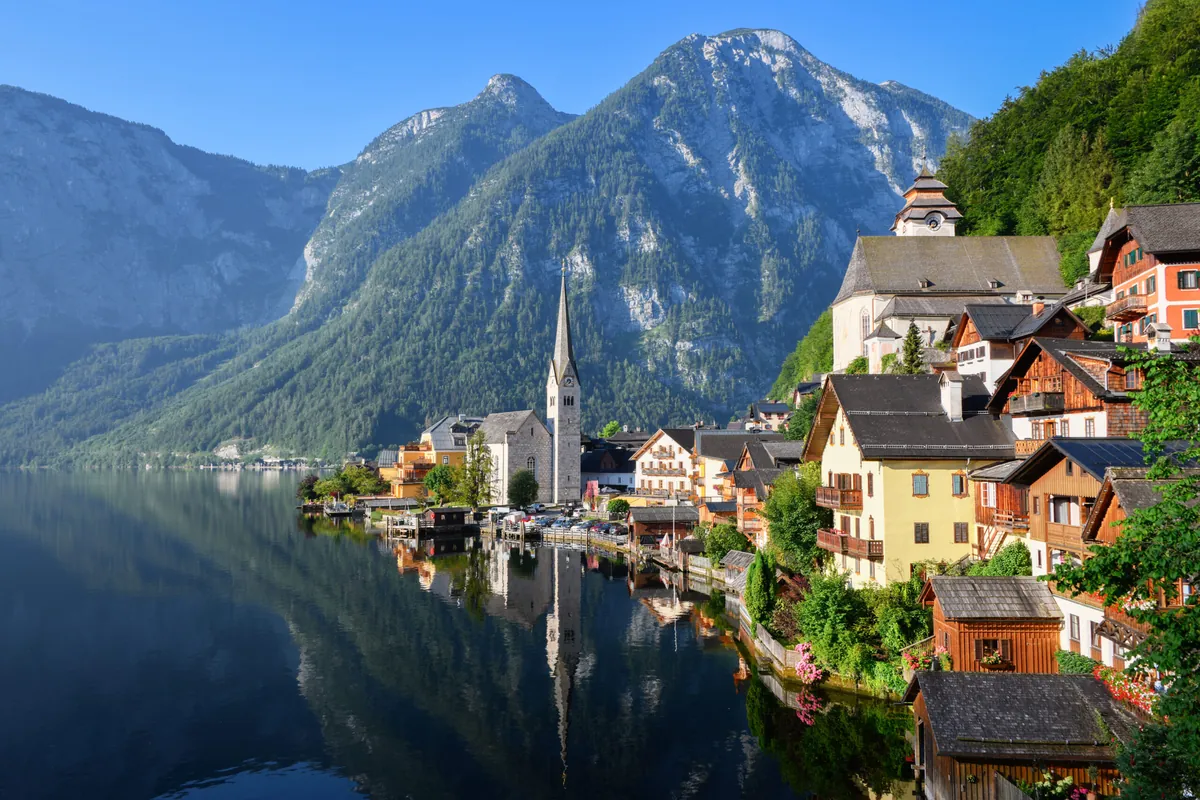
- Salzburg to Hallstatt: about 2 hours 15 minutes by bus via Bad Ischl, or around 1 hour 20 minutes by private car.
- Salzburg to Innsbruck: under 2 hours by Railjet.
- Innsbruck to St. Anton am Arlberg: about 1 hour 15 minutes.
- St. Anton to Zurich: about 2 hours 20 minutes direct.
- Innsbruck to Zurich: about 3 hours 35 minutes direct; Salzburg to Zurich about 5 hours 25 minutes.
- Zurich to Lucerne: 41 minutes.
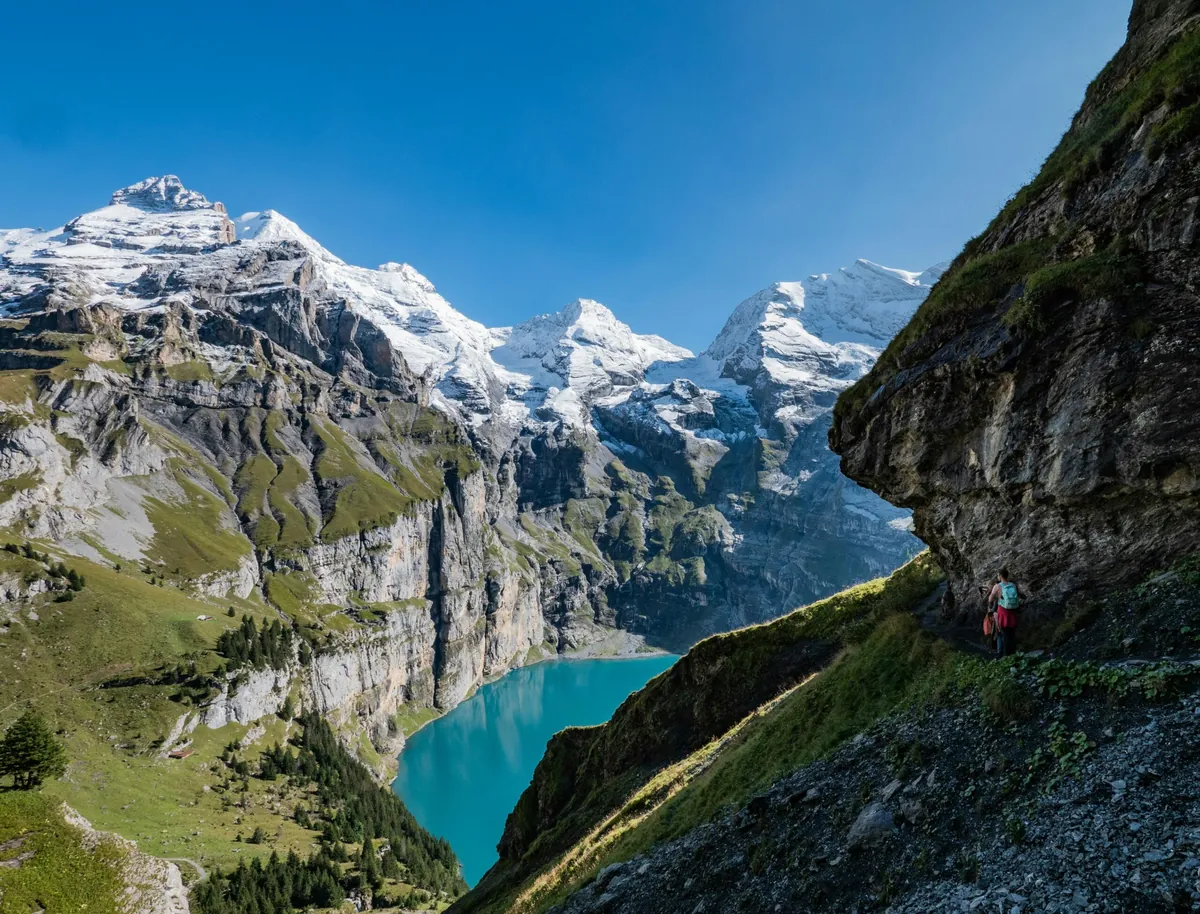
- Lucerne to Interlaken Ost: 1 hour 49 minutes on the panoramic Luzern Interlaken Express.
- Interlaken to Zermatt: about 2 hours 15 minutes, changing in Spiez and Visp.
- Interlaken to Montreux: about 3 hours 15 minutes on the GoldenPass Express.
- Zermatt to Montreux: about 2 hours 40 minutes via Visp.
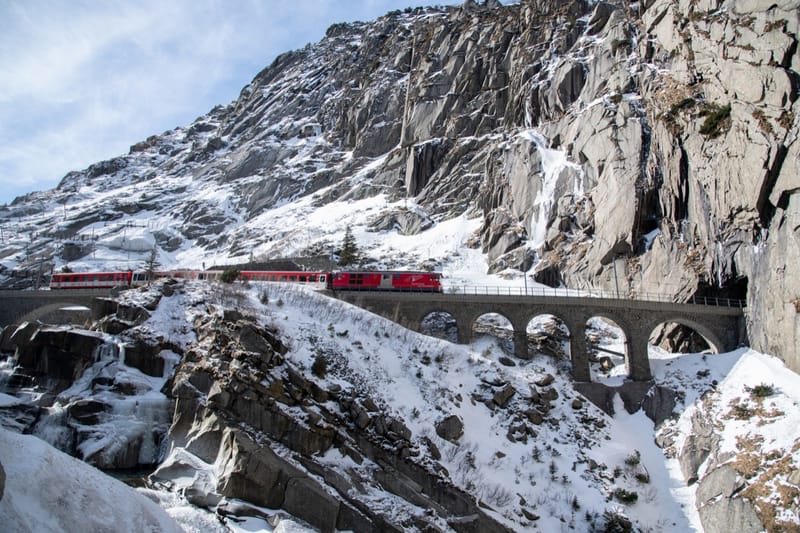
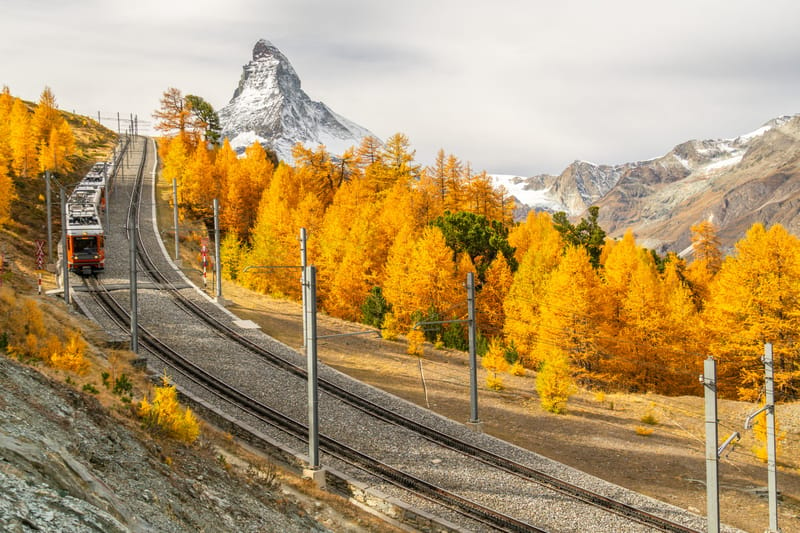
- Zermatt to St. Moritz: roughly 7.5 to 8 hours on the Glacier Express.
- St. Moritz to Zurich: about 3 hours 15 minutes, changing in Chur.
- Montreux to Geneva Airport: about 1 hour 15 minutes direct.
Insider tip: On the Railjet between Zurich and Austria, sit on the right heading east once the train reverses at Buchs, and on the left heading west. Above all, choose a departure that crosses the Arlberg Pass in daylight. It is one of the finest stretches of track in Europe.
Pace: the minimum nights per base
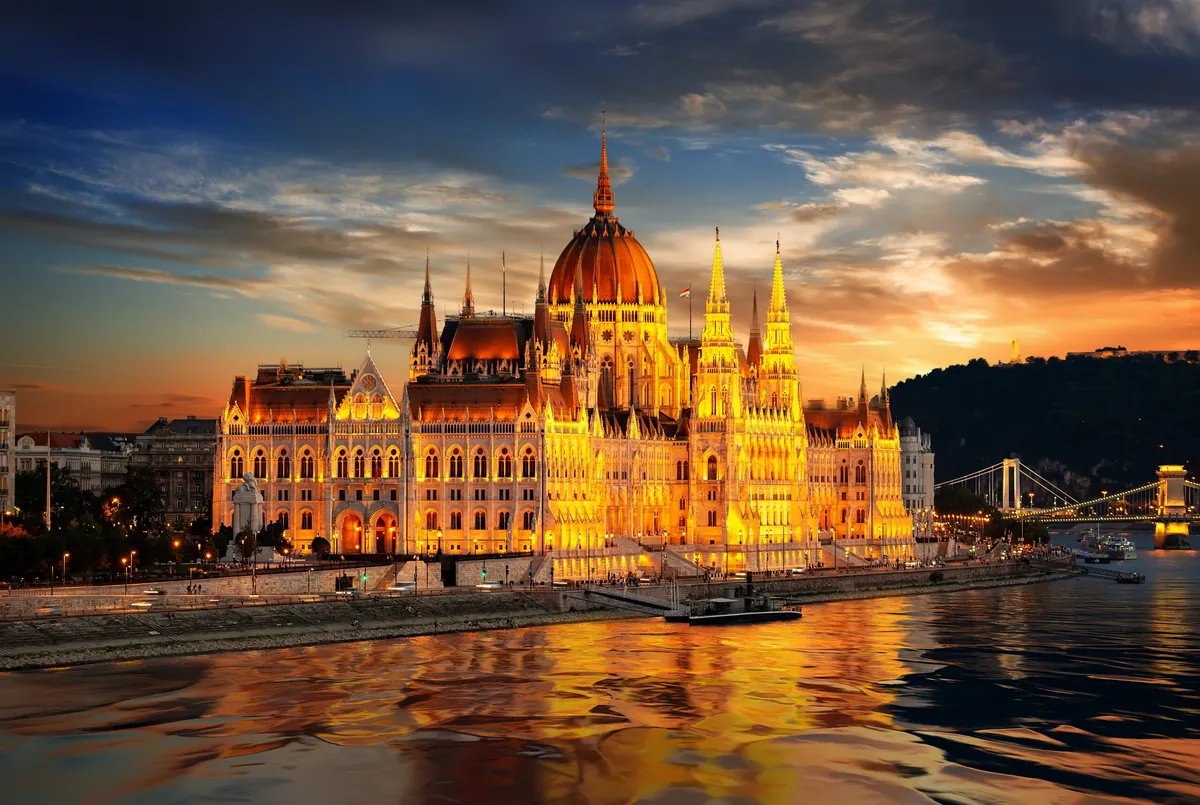
Our rule is simple. Two nights is the minimum anywhere, because one night means you see a hotel room and a station. Three nights belongs in Vienna, which needs a full day for the Habsburg palaces and another for museums, music and the city at leisure. Three nights also belongs in any high mountain base such as Zermatt or the Jungfrau region, because summit views depend on the weather and a spare day lets you pick the clear morning.
Hallstatt is the exception to the two night rule. One night there works beautifully, as long as it is a night and not a rushed day trip.
Insider tip: Stay overnight in Hallstatt. The village is at its most magical in the early evening and before breakfast, when the lake is still and the day visitors have not yet arrived.
Sample routings for 7, 10, 14 and 18+ days
| Trip length | Route | Nights per base | Best for |
|---|---|---|---|
| 7 days | Vienna, Salzburg, Lucerne | Vienna 3, Salzburg 2, Lucerne 2 | A first taste of both countries, accepting one long rail day |
| 10 days | Vienna, Salzburg, Lucerne, Interlaken | Vienna 3, Salzburg 2, Lucerne 2, Interlaken 2 | First timers who want cities, lakes and one great mountain |
| 14 days | Vienna, Salzburg, Hallstatt, Innsbruck, Lucerne, Zermatt | Vienna 3, Salzburg 2, Hallstatt 1, Innsbruck 2, Lucerne 2, Zermatt 3 | The classic grand tour, balanced between culture and Alps |
| 18+ days | Vienna, Salzburg, Hallstatt, Arlberg, Lucerne, Interlaken, Montreux, Zermatt, St. Moritz | Vienna 3, Salzburg 2, Hallstatt 1, Arlberg 2, Lucerne 2, Interlaken 3, Montreux 2, Zermatt 3, St. Moritz 2 | Slow travelers, scenic rail lovers, honeymoons and milestone trips |
7 days: one country, or one bold crossing
A week is enough for Austria alone: Vienna, Salzburg and the Salzkammergut lakes. If you want both countries, spend three nights in Vienna and two in Salzburg with a private day in the Salzkammergut, then take the Railjet to Zurich and continue to Lucerne, roughly six hours door to door. Two nights on Lake Lucerne close the trip, with a flight home from Zurich. It works, as a sampler.
10 days: the honest minimum for both
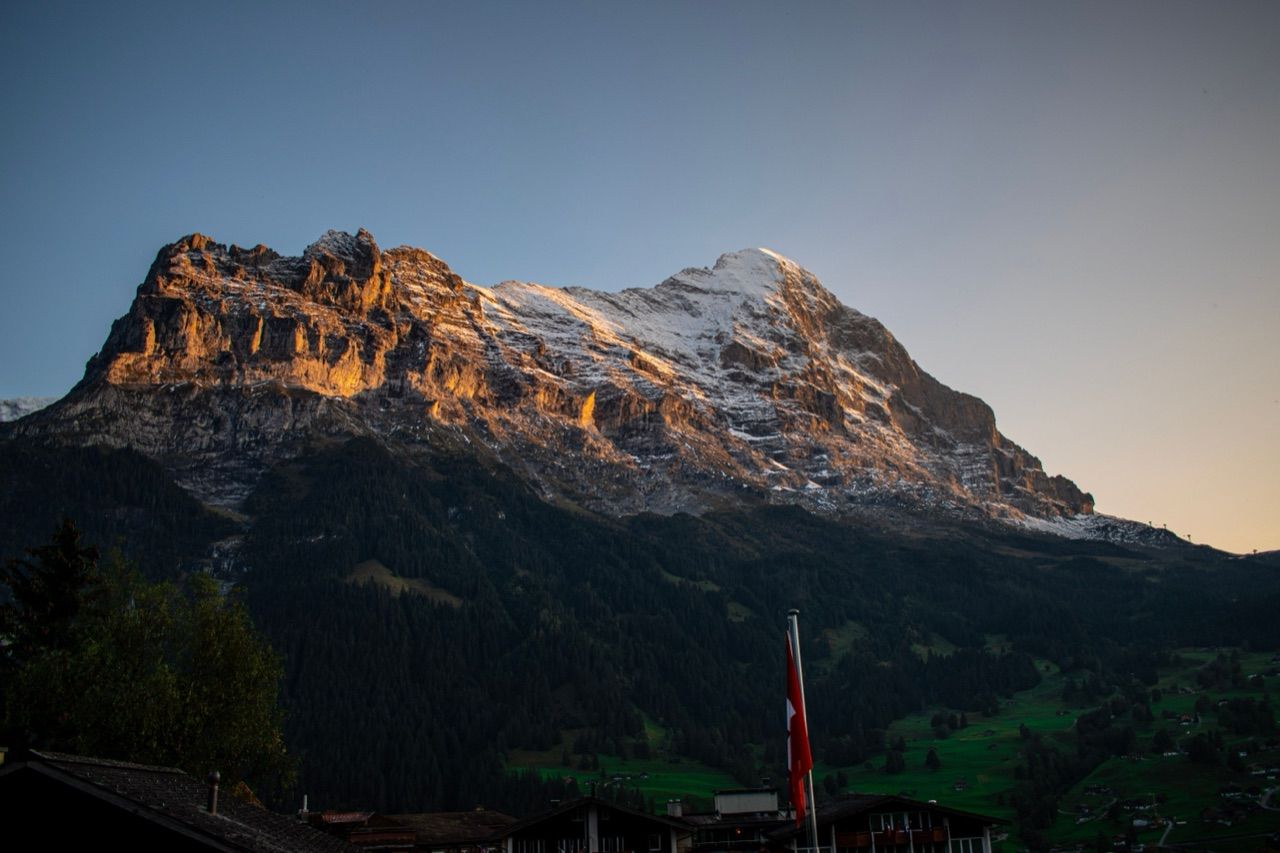
Add Interlaken to the seven day plan and the trip changes character. From Lucerne, the Luzern Interlaken Express runs past lakes and waterfalls to the Jungfrau region, where the Jungfraujoch, Lauterbrunnen and Grindelwald fill two days. Interlaken Ost has direct trains to Zurich in about two hours for your flight home.
14 days: the sweet spot
Two weeks lets you add a night in Hallstatt, two in Innsbruck for the Tirolean Alps, and three in car free Zermatt beneath the Matterhorn. From Lucerne to Zermatt, ride the Luzern Interlaken Express, pause for lunch in Interlaken, then continue via Spiez and Visp. Fly home from Geneva or Zurich.
For travelers drawn to the high Arlberg rather than the city of Innsbruck, swap in two nights at St. Anton or Lech. St. Anton has direct Railjets to Zurich in about 2 hours 20 minutes.
18 days and beyond: the full sweep
With three weeks you can travel the way the region deserves. From Interlaken, the GoldenPass Express descends to Montreux on Lake Geneva for two nights among the vineyards of Lavaux. Then continue to Zermatt, and from there the Glacier Express carries you across the Alps to St. Moritz for two final nights in the Engadin before the three hour run to Zurich. Drop Arlberg and Montreux for a tighter two and a half weeks.
The Swiss Travel Pass: worth knowing
The Swiss Travel Pass covers unlimited travel on trains, buses and boats across the Swiss network, public transport in about 90 towns and cities, and entry to more than 500 museums. Rigi, Stanserhorn and Stoos are included, and most other mountain railways, such as the Gornergrat and Titlis, are discounted by up to 50 percent. 2026 adult prices for consecutive days run from CHF 254 for three days in second class to CHF 697 for eight days in first class. The Glacier Express and Bernina Express are covered, but their seat reservation is compulsory and charged separately.
The pass applies only within Switzerland. Your Austrian legs, and the Railjet across the border, are booked separately. On a fully private trip, we often handle trains as reserved first class tickets with private transfers at each end, so the pass becomes a convenience rather than a necessity.
Seasons, revisions and the Christmas markets
The shoulder seasons of May to June and September to early October are our favorite months for this route: long days, open mountain lifts, and calmer cities than in July and August.
Be careful in late autumn and spring. Many Swiss mountain railways close for annual maintenance, called revision, between the summer and winter seasons, and again from April into May. In 2026, for example, the Grindelwald First cableway closes from 26 October to 27 November and the Pilatus cable car from 19 October to 27 November. The Glacier Express pauses from 11 October to 4 December 2026, and its winter season then runs until 7 May 2027.
Insider tip: The Jungfraujoch itself stays open all year, but its approach railways from Wengen and Grindelwald close in turn for maintenance each autumn. We check the revision calendar for every summit on your route before confirming hotels.
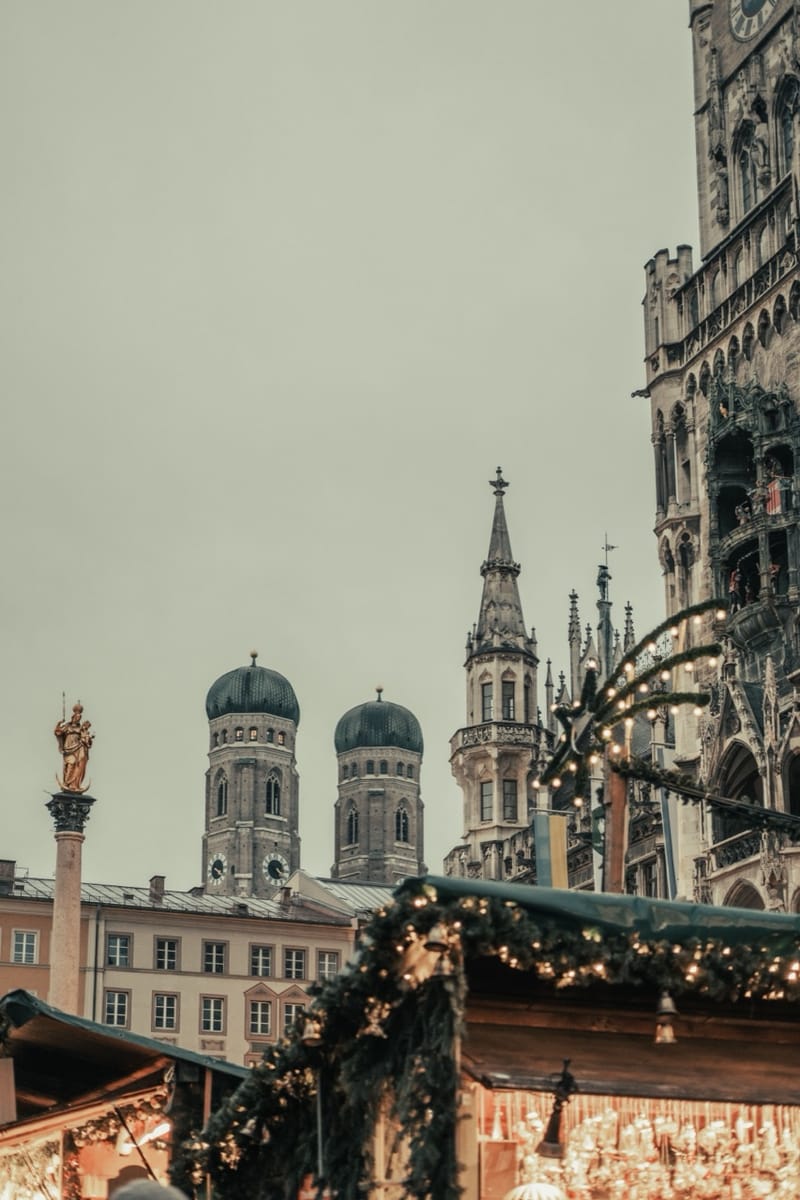
From mid November, the trip takes on a different magic. Vienna’s Christmas markets, from the Rathausplatz to Schönbrunn Palace, run through the weeks before Christmas, and Salzburg and Innsbruck follow suit. A December trip pairs Advent in Austria with snow in the Swiss resorts once the winter lifts reopen.
Insider tip: For a late autumn or Advent trip, put the Austrian cities first and keep the Swiss mountain days for early December, when ski season lifts are running again.
Where to go deeper
If you are still deciding between the two countries, read our honest comparison of Austria vs Switzerland. For hotels, guides and private experiences in each, explore our pages on Austria and Switzerland.
Insider tip: Between Zurich and Interlaken, go via Lucerne on the Luzern Interlaken Express even if a direct train exists. The route passes five lakes and a string of waterfalls, seen from panoramic windows.
Frequently asked questions
Is one week enough for Austria and Switzerland?
One week is enough for one country. For both, seven days means three bases and a single long rail day of about six hours between Salzburg and Lucerne. Ten days is the minimum we recommend for an unhurried trip.
Should I fly into Vienna or Zurich?
Fly into Vienna and out of Zurich or Geneva. Traveling east to west builds from imperial cities to high Alps, and a multi city ticket saves you the long journey back to your arrival airport.
How long is the train from Vienna to Zurich?
About 7 hours 50 minutes on the direct ÖBB Railjet, which runs every two hours. There is also an overnight Nightjet between the two cities with sleeping cars.
How many days do I need in Zermatt?
Three nights. Matterhorn views depend on clear skies, and a spare day lets you ride the Gornergrat or Matterhorn Glacier Paradise on the best morning rather than the scheduled one.
When should I avoid traveling to the Swiss Alps?
Avoid relying on specific mountain excursions in November and April into early May, when many lifts close for revision. The cities and lakes remain lovely, but check each summit’s maintenance dates before you book.
Whether you have ten days or three weeks, we will shape the routing, the pace and every private transfer around how you like to travel. Start planning your Austria and Switzerland journey with Avellera.