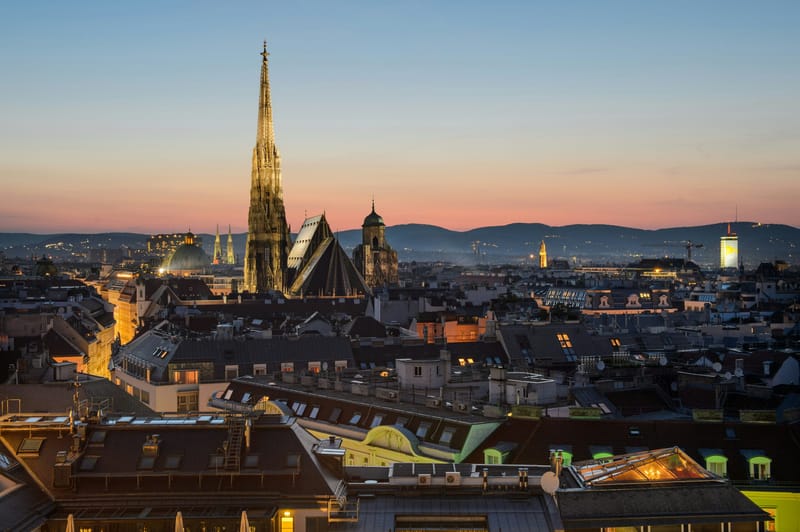
In short: The best coffeehouses in Vienna are not just places to drink coffee. They are living institutions, recognised since 2011 on Austria’s national inventory of UNESCO intangible cultural heritage. Order a Melange or an Einspänner, expect a glass of water alongside, and stay as long as you like. Our shortlist: Sperl, Prückel, Landtmann, Hawelka, the newly reopened Bräunerhof, Schwarzenberg, Diglas, Ritter, Jelinek, Kleines Café, plus Demel and Sacher for cake. Note that Café Central is closed for renovation in autumn 2026.
We are based in Vienna, and the coffeehouse is where our own days begin and our client meetings end. This is the list we hand to friends, with the honest notes that guidebooks leave out: which rooms are full of Viennese, which ones are full of queues, and what has changed this year.
Why Viennese coffeehouse culture is UNESCO heritage
In October 2011, Viennese coffeehouse culture was added to the Austrian inventory of intangible cultural heritage, kept by the Austrian Commission for UNESCO. The listing captures the spirit in a single line: the coffeehouse is a place where time and space are consumed, but only the coffee appears on the bill.
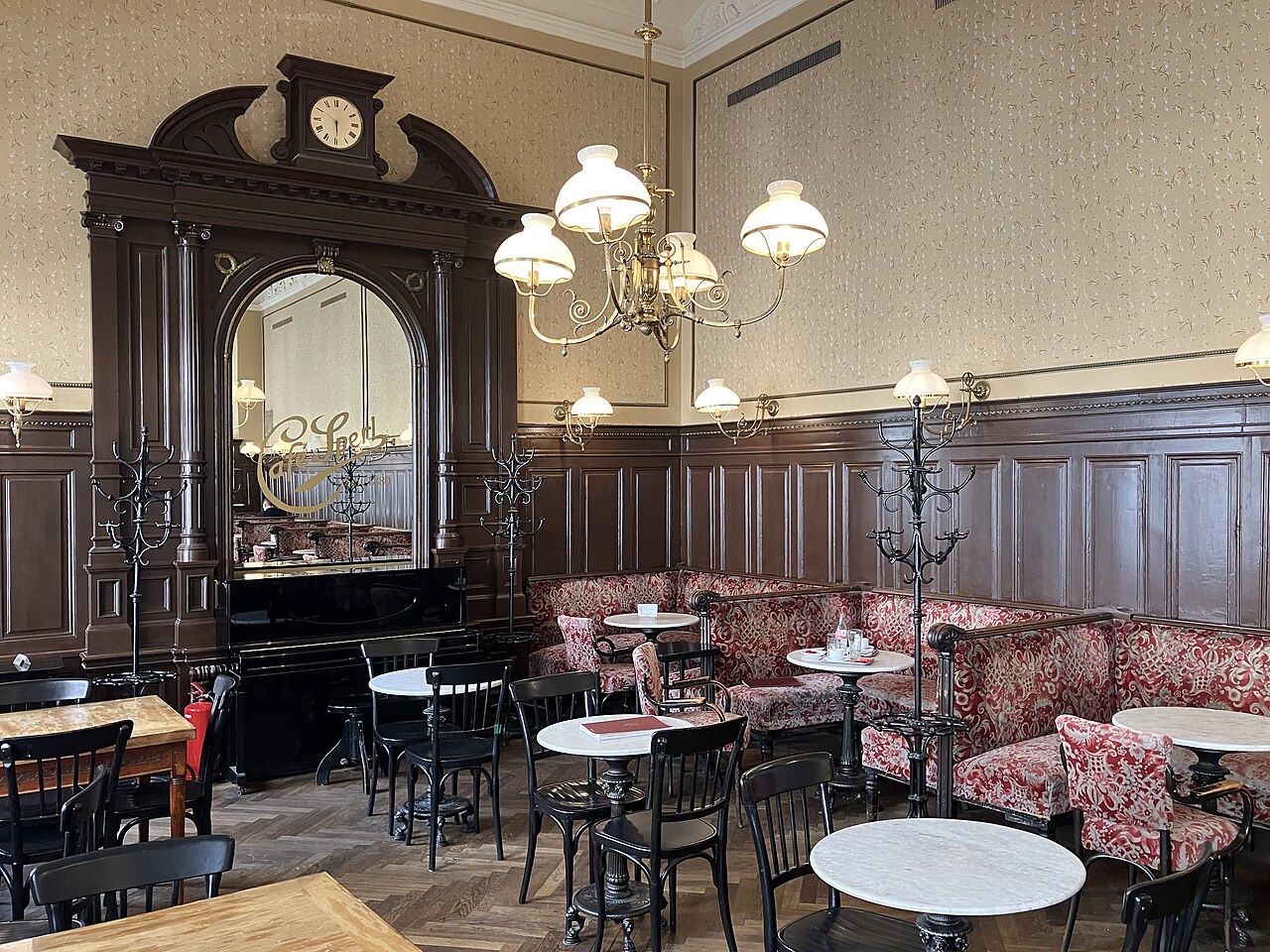
The inventory names the details you will recognise the moment you sit down: marble tabletops, Thonet bentwood chairs, alcoves, and a table of newspapers. The tradition reaches back to the late 17th century, after the Ottoman siege. By 1720 Café Kramer was laying out newspapers for its guests, and in 1856 women were finally admitted. The Club of Viennese Coffeehouse Owners, founded in 1956, still looks after the craft today.
How to order coffee in Vienna
Ask for “a coffee” and your waiter will look at you with polite pity. The Viennese menu is built around Mokka, a short, strong black coffee, and almost everything is a variation on it.
- Wiener Melange: the house classic. A lengthened Mokka with warm milk and a soft cap of milk foam. Milder than a cappuccino.
- Einspänner: strong black coffee in a glass, crowned with whipped cream. Named after the one horse carriage drivers who held the glass in one hand. Do not stir; drink the hot coffee through the cold cream.
- Verlängerter: a Mokka lengthened with hot water. The closest thing to an American coffee, and the order of anyone settling in for an hour.
- Kleiner Brauner: a short Mokka with a splash of milk or cream on the side. Vienna’s answer to a macchiato. A Großer Brauner is the double.
- Kleiner Schwarzer: a plain single Mokka, black.
Insider tip: If you only remember one word, make it Melange. It is what most Viennese order, and it tells the waiter you know where you are.
Coffeehouse etiquette: water, newspapers and the art of lingering
Every coffee arrives with a glass of tap water. It cleanses the palate, and in a good house it is refilled without asking. A spoon laid across the top of the glass is the old signal that the water is fresh.
The newspapers hang on wooden holders by the door or on a central table. Take one, read as long as you like, and return it to its place when you are done.
Address the waiter as Herr Ober. Service is formal, and the bill will not appear until you ask for it. Say “Zahlen, bitte” when you are ready to pay. Rounding up the bill is customary.
Insider tip: Lingering is not tolerated, it is expected. Staying two hours over one Melange is not rude. Waving impatiently for the waiter is.
Our shortlist of the best coffeehouses in Vienna
| Coffeehouse | District | Order this | Best for |
|---|---|---|---|
| Café Sperl | 6th, Mariahilf | Melange and Sperl Torte | The most authentic room in the city; billiards |
| Café Prückel | 1st, Stubenring | Verlängerter and apple strudel | 1950s design and a local crowd by the MAK |
| Café Landtmann | 1st, Universitätsring | Einspänner and a Schnitzel | Elegant lunches near the Burgtheater |
| Café Hawelka | 1st, Dorotheergasse | Melange and Buchteln | Late nights and bohemian history |
| Café Bräunerhof | 1st, Stallburggasse | Kleiner Brauner and the paper | Quiet literary mornings, newly restored |
| Café Schwarzenberg | 1st, Kärntner Ring | Einspänner on the terrace | Grandeur after the Musikverein or Konzerthaus |
| Café Diglas | 1st, Wollzeile | Melange and Scheiterhaufen | Cakes and piano near St. Stephen’s |
| Café Ritter | 6th, Mariahilfer Straße | Verlängerter and breakfast | A calm pause from shopping |
| Café Jelinek | 6th, Otto-Bauer-Gasse | Melange and house Guglhupf | Worn, cosy, entirely Viennese |
| Kleines Café | 1st, Franziskanerplatz | A glass of wine after dark | Tiny, romantic, open until 2 am |
| Demel | 1st, Kohlmarkt | Kaiserschmarrn or a slice of torte | Imperial pastry, best on a weekday |
| Café Sacher | 1st, Philharmonikerstraße | Original Sacher-Torte with cream | The classic, by the State Opera |
The coffeehouses where locals go
Café Sperl at Gumpendorfer Straße 11 has served coffee since 1880, and it is the room we would choose if we could show you only one. Three carom billiard tables, a Sunday afternoon pianist and a house cake, the Sperl Torte, that you will not find elsewhere. Open Monday to Saturday from 7:00 and Sundays from 10:00, though it closes on Sundays in July and August.
Café Prückel on the Stubenring opened in 1903, and its interior was redesigned in 1955 by Oswald Haerdtl. That fit out is now heritage protected, so when new operators took over in January 2024 they renewed the upholstery in the original fabric patterns and changed almost nothing else. The welcome difference is that you can now pay by card. A theatre stage has opened in the cellar.
Café Bräunerhof is the comeback story of the year. The 1920s house in Stallburggasse, once the daily haunt of Thomas Bernhard, went into insolvency in 2025. The Plachutta family and Peter Friese of Zum Schwarzen Kameel took it over, restored it carefully, and reopened it on 17 June 2026. The benches are the same, the cushions are better, and the menu has grown gently.
Café Jelinek in Otto-Bauer-Gasse still heats its room with an old wrought iron stove and bakes its own Guglhupf. It is shabby in the way only the genuinely loved places are. Nearby, Café Ritter at Mariahilfer Straße 73 is a calm, wood panelled refuge from the shopping street, with breakfast served into the afternoon. Please note this is the Mariahilf house; the Ritter in Ottakring closed in 2023.
Kleines Café on Franziskanerplatz was designed by the architect Hermann Czech in 1970, and fans of Before Sunrise will recognise it. A handful of tables inside, a square of cobblestones outside, and a crowd that drifts from coffee to red wine as the evening goes on. It is cash only.
Insider tip: For the most local experience, cross into the 6th district. Sperl, Jelinek and Ritter sit within a short walk of each other and the Naschmarkt, and you will hear far more German than English.
The grand cafés, and the famous ones worth the queue
Café Landtmann on the Ring opened in 1873 and counts Sigmund Freud, Gustav Mahler and Paul McCartney among its guests. Facing the Burgtheater and close to Parliament, it is where politicians and actors lunch. Since April 2026 it also runs as Landtmann at Night, with new evening dishes and live music on Wednesdays.
Café Schwarzenberg on the Kärntner Ring, opened in 1861, is the oldest of the Ringstrasse cafés. Josef Hoffmann sketched here. Take the terrace on a mild evening.
Café Hawelka in Dorotheergasse is smoky brown history with the smoke long gone: artists, writers and a famous late evening ritual of warm Buchteln, jam filled yeast buns, fresh from the oven. It stays open until 1 am on Fridays and Saturdays.
Café Diglas at Wollzeile 10 has poured coffee since 1923, and Franz Lehár was a regular. Red banquettes, piano music and a serious cake counter make it a reliable stop after St. Stephen’s.
Demel at Kohlmarkt 14, founded in 1786, was confectioner to the imperial court. It opens daily from 10:00 to 19:00 and does not take reservations. Café Sacher beside the State Opera serves the Original Sacher-Torte with unsweetened whipped cream, daily from 7:00 to 23:00, and asks guests to reserve online.
A note on Café Central: the most famous coffeehouse of all, in Palais Ferstel, closed on 16 March 2026 for a full technical renovation in its 150th anniversary year. Its own website currently gives the reopening as winter 2026. Until then, the team runs a pop up called Decentral a few minutes away at Freyung 3, open daily from 7:30 to 22:00.
Touristy or local, and how to beat the queues
The honest split: Sacher, Demel, Hawelka and, once it reopens, Central draw most of the queues. They are touristy in volume but not in quality, and each is worth a visit on its own terms. Sperl, Prückel, Bräunerhof, Jelinek, Ritter and Kleines Café are where you will mostly find the Viennese.
Insider tip: Go to the famous houses at opening time. Sacher serves breakfast from 7:00, and a weekday arrival at 10:00 sharp is the calmest way into Demel. Lines tend to build from late morning through the afternoon.
Insider tip: At Sacher, reserve a table online rather than queuing on the pavement. At Demel, where reservations are not taken, the ground floor shop sells cake to take away if the salon is full.
If you are shaping a longer stay, our Austria travel guide and our list of the best restaurants in Vienna where locals eat pair naturally with this one.
Frequently asked questions
What are the best coffeehouses in Vienna?
For authenticity, Café Sperl, Café Prückel and the newly reopened Café Bräunerhof. For grandeur, Café Landtmann and Café Schwarzenberg. For pastry, Demel and Café Sacher.
Is Viennese coffeehouse culture a UNESCO World Heritage?
It is listed as intangible cultural heritage on Austria’s national inventory, maintained by the Austrian Commission for UNESCO, since 2011.
Is Café Central open in 2026?
Not at the moment. It closed on 16 March 2026 for renovation, with reopening announced for winter 2026. The pop up Café Decentral at Freyung 3 serves its coffee and pastries in the meantime.
What should I order in a Viennese coffeehouse?
A Wiener Melange is the safe and very local choice. Try an Einspänner if you like it strong, and pair either with apple strudel or a slice of torte.
Do I need a reservation?
For most coffeehouses, no. Café Sacher asks guests to reserve online, while Demel does not accept reservations at all, so arrive early.
Vienna rewards the traveller who slows down, and there is no better place to practise than a marble table with a Melange. If you would like us to weave the right coffeehouses into a private Vienna itinerary, from a quiet morning at Sperl to a table held at Sacher, start planning your journey with Avellera or explore all our destinations across Central Europe.