In short: The Viennese rarely eat where the guidebooks send them. Real local dining happens in the Beisl — the neighbourhood tavern — and mostly outside the 1st district, in the 2nd, 4th, 6th, 7th, 8th and 9th. Lunch is the value: most kitchens serve a two-course Mittagsmenü at a fraction of the dinner price. Book two to three weeks ahead for the well-known rooms, and remember that many of the best kitchens close on Sunday.
We live and work in Vienna, and we book these tables every week. Here is the honest version of where the city actually eats — the places we send our own travellers, and the logic behind them.
The one rule: cross the Ring
Inside the Ringstrasse you are in the museum quarter of Viennese dining: beautiful, expensive, and heavily visited. Ten minutes on foot or two stops on the tram takes you into the residential districts where the same food costs less and the room is full of Viennese. That is the whole trick. The 7th (Neubau) and 8th (Josefstadt) are the easiest to love, the 2nd (Leopoldstadt) is where the interesting new kitchens have gone, and the 4th and 6th around the Naschmarkt reward anyone willing to walk a few blocks off the market itself.
The Beisl: Vienna’s neighbourhood table
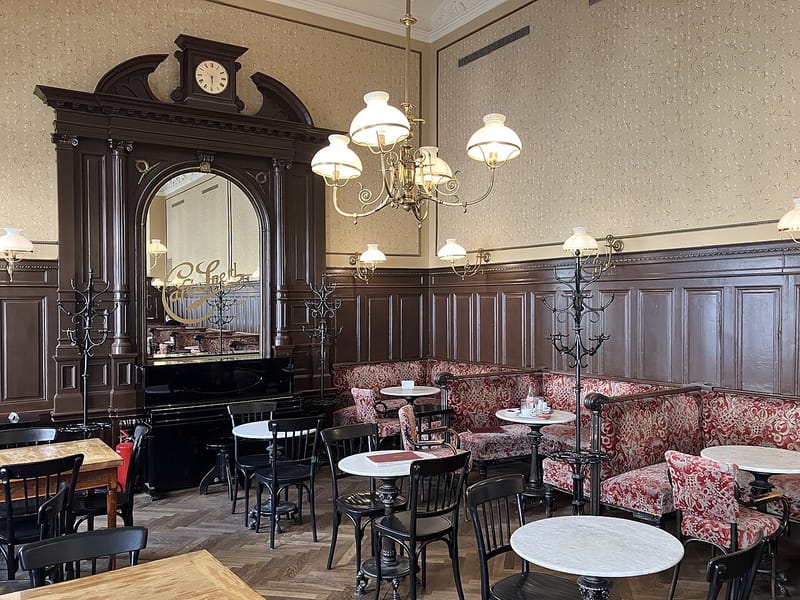
A Beisl is a wood-panelled tavern with a short handwritten menu, unfussy service and food that has not changed in fifty years. It is the single most Viennese thing you can do at a table.
- Gasthaus Pöschl (Weihburggasse 17, 1st) — the exception that proves the rule. A tiny, dark, genuinely local room in the middle of the old town, open daily. Reserve; there are only a handful of tables.
- Gasthaus Wolf (4th) — a classic corner Beisl near the Naschmarkt end of Wieden, generous portions, no theatre.
- Zum Alten Fassl (5th) — leafy courtyard in summer, proper Viennese cooking all year.
- Schnitzelwirt (7th) — the famously oversized schnitzel, eaten by students, families and half of Neubau. Cash-friendly, no reservations culture, expect a queue.
- Glacis Beisl (behind the MuseumsQuartier, 7th) — the polished modern reading of the Beisl, with a garden that is one of the loveliest summer terraces in the city.
Where to eat what
| If you want | Go to | District | Note |
|---|---|---|---|
| Wiener Schnitzel | A Beisl, not a landmark | 7th, 4th | Veal is the original; pork is the everyday version |
| Tafelspitz | A traditional Wirtshaus | 1st, 9th | Vienna’s true signature dish, better than schnitzel |
| A long, elegant lunch | An old institution | 1st | Lunch menus cost far less than dinner |
| Modern Austrian cooking | Leopoldstadt | 2nd | Dinner only in many rooms, closed Sunday |
| Wine with a view | A Heuriger in the hills | 19th | Grinzing and Nussdorf; go late afternoon |
The pattern to notice: dish first, then the right kind of room for it. That is how the Viennese choose.
The old institutions that earn their reputation
Not every famous address is a tourist trap. Zum Schwarzen Kameel in the 1st has been a Viennese fixture since it began as a spice merchant’s shop in 1618; the standing bar with open sandwiches and a glass of Grüner Veltliner is a genuine local ritual, and considerably better value than the dining room next door. For Tafelspitz — boiled beef with its broth, rösti, apple horseradish and chive sauce — the Plachutta houses remain the reference. Both are places Viennese actually take their parents.
New Vienna, across the canal
The 2nd district is where the city’s cooking has moved on. Skopik & Lohn (Leopoldsgasse 17) is the emblem: a bistro under a famously scribbled ceiling, serving Austrian dishes with a lighter, more Mediterranean hand. It opens in the evening only and closes on Sunday — a schedule worth checking before you plan your night, and exactly the kind of detail we handle for our travellers.
One evening worth dressing for
Steirereck im Stadtpark is the city’s most celebrated kitchen, sitting in the middle of the Stadtpark with the Wien river running past the window. It is a special-occasion room in every sense, and its lunch is the most civilised way to experience it. Tables open a few months ahead and go quickly; if a specific date matters to you, that reservation is the first thing we make, not the last.
Three habits that make you look like a local
- Eat lunch properly. The Mittagsmenü is the best-value meal in Austria and the Viennese build their day around it.
- Reserve, then arrive on time. Small rooms mean one sitting; being fifteen minutes late can cost you the table.
- Check Sunday and August. Many family-run kitchens close on Sundays, and some take summer holidays — the most common way a promising evening falls apart.
How we do it for you
On an Avellera trip you do not spend your first evening reading reviews. We match restaurants to your taste, your walking distance and your energy on that particular day, hold the reservations in our name, and rebook them without drama when a day runs long. That is part of how we build a trip, alongside the private guides and the rail legs. Vienna is also the natural centre of our Prague, Vienna and Budapest route, and you can see the rest of the map on our Austria page.
Frequently asked questions
Where do locals actually eat in Vienna?
In neighbourhood Beisl and Wirtshaus taverns, mostly outside the 1st district — the 2nd, 4th, 6th, 7th, 8th and 9th. The food is the same tradition, the room is full of Viennese, and the bill is noticeably smaller.
Is Figlmüller worth it for schnitzel?
It is an honest kitchen with an enormous pork schnitzel and long queues of visitors. If you want the dish without the crowd, a Beisl in the 7th district serves it just as well, and often with veal.
How far ahead should you book a restaurant in Vienna?
Two to three weeks for good neighbourhood restaurants, and several months for the city’s most celebrated tables. Weekend evenings in December and during ball season book out first.
What should you eat in Vienna besides schnitzel?
Tafelspitz, Backhendl, Gulasch with a Semmel, and in autumn the game and pumpkin dishes. Finish with Kaiserschmarrn or a slice of cake in a coffeehouse rather than at the restaurant.
Do you need to speak German to eat well in Vienna?
No. English is widely spoken, and in the most local rooms a friendly greeting is enough. Where it does help, your Avellera contact makes the reservation and the special requests for you.
Eat the way the city does
Tell us how you like to eat — long lunches or late dinners, classic or modern, wine country or city — and we will build your Vienna days around the right tables. Start planning your tailor-made trip with an Avellera local expert.