In short: The oldest zoo in Europe, and the oldest continuously operating zoo in the world, is the Tiergarten Schönbrunn in Vienna, founded in 1752 as an imperial menagerie. Paris followed in 1794, London in 1828 and Dublin in 1831. Most of Europe's historic zoos began as royal collections or learned societies and are still open today.
Zoos are older than most travelers expect. Long before the word "zoo" existed, emperors and kings kept exotic animals as living proof of their reach. A handful of those collections, and the scientific societies that came after them, have survived wars, revolutions and two centuries of changing ideas about how animals should live. Here is how Europe's oldest zoos rank, what makes each one special, and how to fit a visit into a trip.
What counts as the oldest zoo?
Rankings differ because founding dates are slippery. Some zoos count from the year a ruler built a menagerie, others from the day the public was first admitted, and some from the founding of the society that ran them. We use the date each zoo itself gives as its founding, and note where public opening came later. By any of these measures, Vienna comes first: Guinness World Records lists the Tiergarten Schönbrunn as the oldest continuously operating zoo on earth.
Tiergarten Schönbrunn, Vienna (1752)
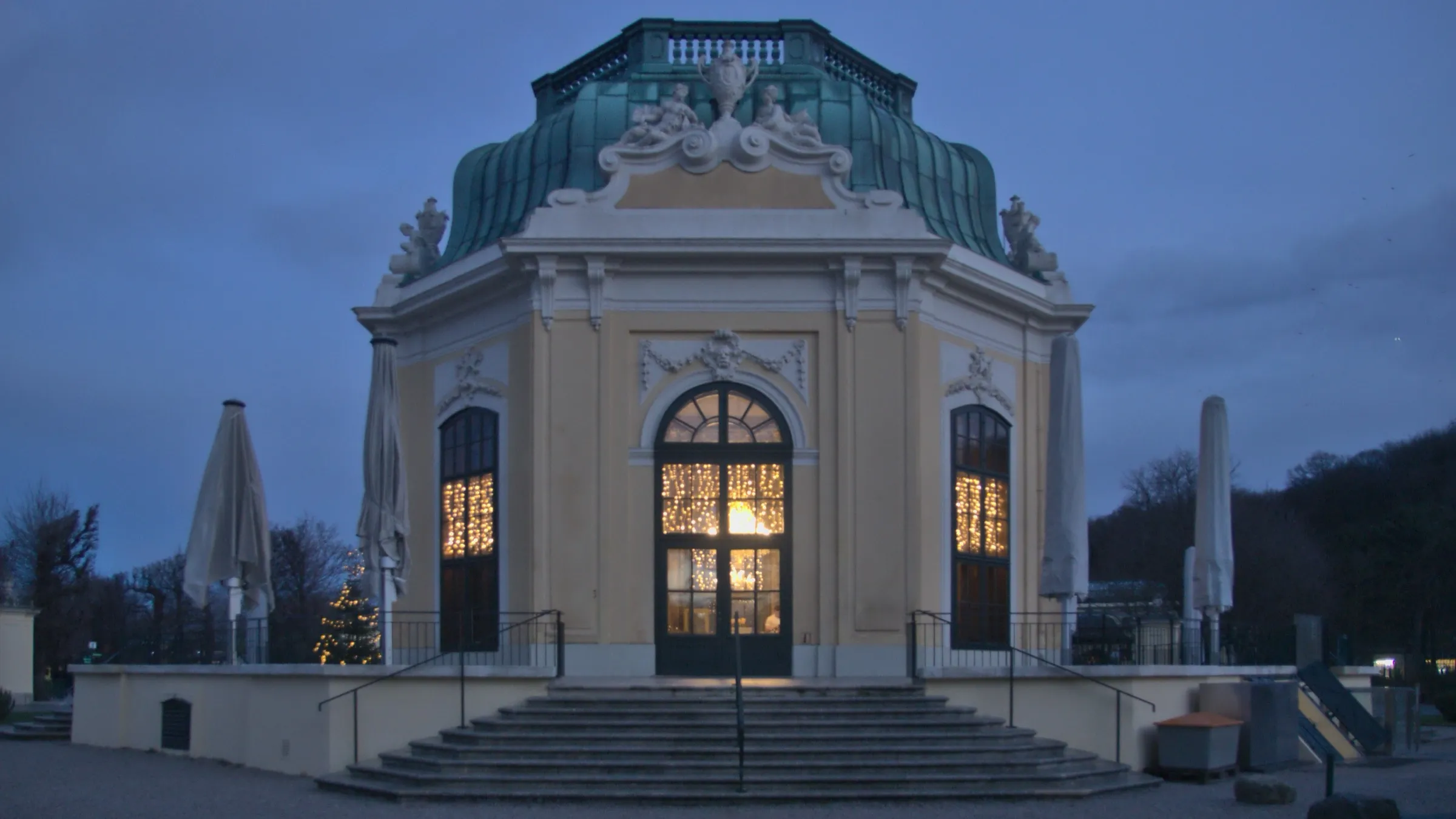
Emperor Franz Stephan, husband of Maria Theresa, ordered a menagerie in the gardens of Schönbrunn Palace, and the court presented it to guests on 31 July 1752, the date the zoo still celebrates as its birthday. The layout was planned by the architect Jean Nicolas Jadot: twelve enclosures with identical animal houses radiating like the slices of a cake around a central pavilion, so the imperial family could take breakfast surrounded by animals. That octagonal Kaiserpavillon, finished in 1759, still stands at the heart of the zoo and has served as a café and restaurant since 1949.
The menagerie was opened to the public in 1779. In 1906 it recorded the first elephant born in human care. Today the zoo shows around 500 species, sits within the Schönbrunn Palace and Gardens UNESCO World Heritage site. In April 2025 a new pair of giant pandas, He Feng and Lan Yun, arrived from Sichuan for a ten year stay in a renovated enclosure.
Insider tip: Enter through the Hietzing gate and walk the old radial paths toward the pavilion first. You see the baroque plan as it was meant to be seen, before the crowds coming up from the palace arrive.
The Ménagerie du Jardin des Plantes, Paris (1794)
The Paris Ménagerie was born of the French Revolution. In 1794 a decree of the National Convention created a public zoo within the Jardin des Plantes, and the surviving animals of the royal menagerie at Versailles, together with those of the Duke of Orléans, were moved there: 58 animals in all. Its most famous resident was Zarafa, a giraffe sent by the ruler of Egypt, who arrived in 1827 and caused a sensation across France.
The Ménagerie is small and intimate by modern standards, with historic buildings that have been listed as monuments since 1993. It belongs to the National Museum of Natural History, which makes it an easy pairing with the Grand Gallery of Evolution next door.
London Zoo (1828) and Dublin Zoo (1831)
London Zoo, founded by the Zoological Society of London, officially opened on 27 April 1828 in Regent's Park and calls itself the world's oldest scientific zoo. It was conceived by Sir Stamford Raffles, the founder of modern Singapore, and was at first reserved for Fellows of the Society; the general public was admitted only in 1847. London then pioneered the first reptile house in 1849 and the first public aquarium in 1853.
Dublin Zoo opened its gates in the Phoenix Park on 1 September 1831, run by the Zoological Society of Ireland, which had been founded the year before.
Artis, Antwerp and Berlin: the great society zoos
The middle of the nineteenth century belonged to the zoological societies, groups of scholars and wealthy citizens who built zoos as places of learning.
- Artis, Amsterdam (1838): founded as the Natura Artis Magistra society, "nature is the teacher of art", by G.F. Westerman, J.W.H. Werlemann and J.J. Wijsmuller. It is the first public zoo in the Netherlands and, with its aquarium, planetarium and old trees, still feels like a nineteenth century city garden.
- ZOO Antwerpen (1843): established on 21 July 1843 right beside what is now Antwerp's grand Central Station, it is the oldest zoo in Belgium.
- Zoo Berlin (1844): opened on 1 August 1844 as the first zoo in Germany, on land given by King Friedrich Wilhelm IV. It rebuilt after nearly all of its animals were lost in the Second World War, became world famous through the polar bear Knut in 2006, and welcomed Germany's first panda cubs in 2019.
- Diergaarde Blijdorp, Rotterdam (1857): opened on 18 May 1857 by the Rotterdamsche Diergaarde society and moved in 1940 to its present park in the Blijdorp district, where it shows more than 500 species.
- Zoo Frankfurt (1858): founded by Frankfurt citizens as Germany's second zoo, it moved to its present site in the east of the city in 1874.
Insider tip: Antwerp's zoo sits directly next to the station, so it works beautifully as a two or three hour stop on a rail journey between Amsterdam and Brussels.
Europe's oldest zoos at a glance
| Rank | Zoo | City | Founded | Origin |
|---|---|---|---|---|
| 1 | Tiergarten Schönbrunn | Vienna, Austria | 1752 | Imperial Habsburg menagerie |
| 2 | Ménagerie du Jardin des Plantes | Paris, France | 1794 | Revolutionary decree, animals from Versailles |
| 3 | London Zoo | London, United Kingdom | 1828 | Zoological Society of London |
| 4 | Dublin Zoo | Dublin, Ireland | 1831 | Zoological Society of Ireland |
| 5 | Artis | Amsterdam, Netherlands | 1838 | Natura Artis Magistra society |
| 6 | ZOO Antwerpen | Antwerp, Belgium | 1843 | Royal Zoological Society of Antwerp |
| 7 | Zoo Berlin | Berlin, Germany | 1844 | Royal gift of a pheasantry and menagerie |
| 8 | Diergaarde Blijdorp | Rotterdam, Netherlands | 1857 | Rotterdamsche Diergaarde society |
| 9 | Zoo Frankfurt | Frankfurt, Germany | 1858 | Zoological society of Frankfurt citizens |
Visiting a historic zoo in style
A historic zoo is rarely just a zoo. In Vienna, the Tiergarten is part of the same imperial landscape as Schönbrunn Palace, the Gloriette and the Palm House, so a morning with the animals can flow into a private palace tour and lunch with a view. In Berlin, the zoo borders the Tiergarten park and the elegant west of the city; in Paris, the Ménagerie shares its garden with a natural history museum.
Insider tip: Families traveling with grandparents should plan the zoo for the first half of the day, when the animals are most active and the paths are quiet, and keep afternoons free for rest. It is exactly the kind of pacing we build into our multigenerational journeys.
If you enjoy Europe's quiet superlatives, you may also like our guides to the oldest universities in Europe and the oldest coffee houses in Europe.
Planning your trip
Vienna is the natural place to begin, both for the world's oldest zoo and for everything else Austria offers, from the Wachau Valley to the lakes of the Salzkammergut. Berlin and Frankfurt fit easily into a journey through Germany, and our Best of Austria itinerary already includes Schönbrunn.
Avellera is a Vienna-based luxury travel company led by its co-founders, Clemens and Kamilla Sengwein-Réti. We design high-end, tailor-made journeys through Austria, Switzerland and Central Europe, with private guides who know these places from the inside. Start planning your journey and we will shape it around you.
Frequently asked questions
What is the oldest zoo in Europe?
The Tiergarten Schönbrunn in Vienna, founded in 1752 as an imperial menagerie. Guinness World Records lists it as the oldest continuously operating zoo in the world.
What is the second oldest zoo in Europe?
The Ménagerie du Jardin des Plantes in Paris, created in 1794 with animals from the royal menagerie at Versailles.
What is the oldest zoo in Germany?
Zoo Berlin, which opened on 1 August 1844 as the first zoo in Germany. Zoo Frankfurt followed in 1858.
Can you see giant pandas at Schönbrunn Zoo?
Yes. The giant pandas He Feng and Lan Yun arrived from China in April 2025 for a planned stay of ten years, living in a newly renovated enclosure.
Photo: Paul Korecky, CC BY-SA 2.0, via Wikimedia Commons